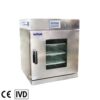
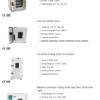
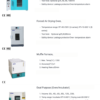
Types of Laboratory Ovens
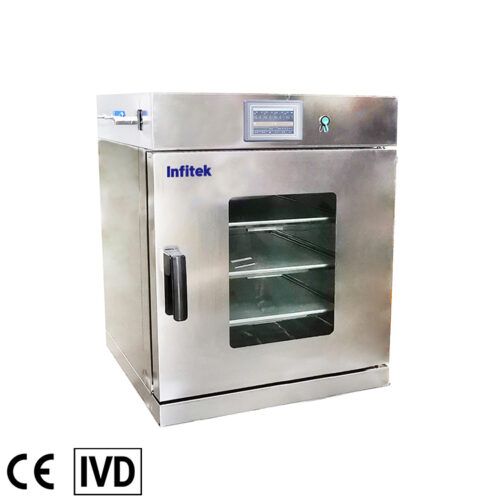
Vacuum Oven
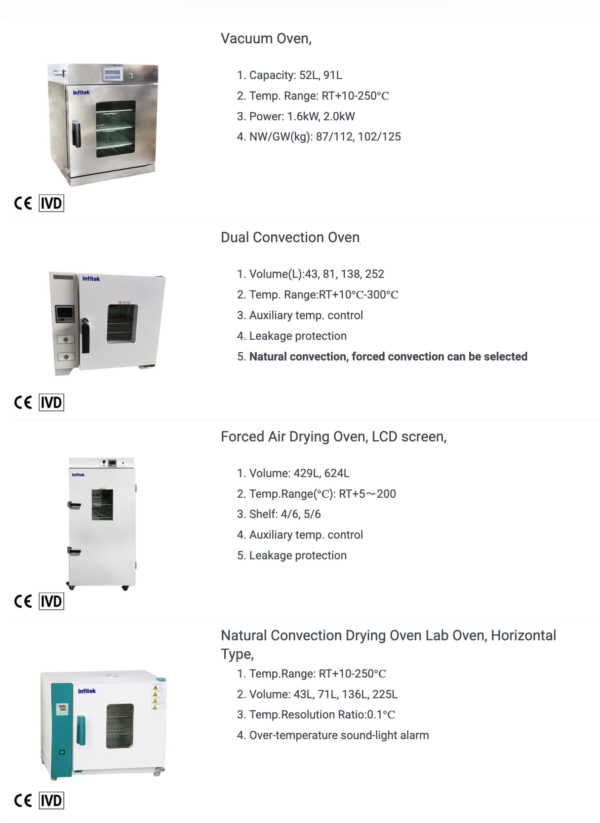
Vacuum ovens operate under reduced pressure, allowing samples to be dried at lower temperatures while preventing oxidation or contamination. They are ideal for drying heat-sensitive or easily decomposable materials.
Natural Convection Oven
Natural convection ovens rely on natural air circulation inside the chamber for gentle and stable heating. They are suitable for routine laboratory drying, heating, and sterilization applications.
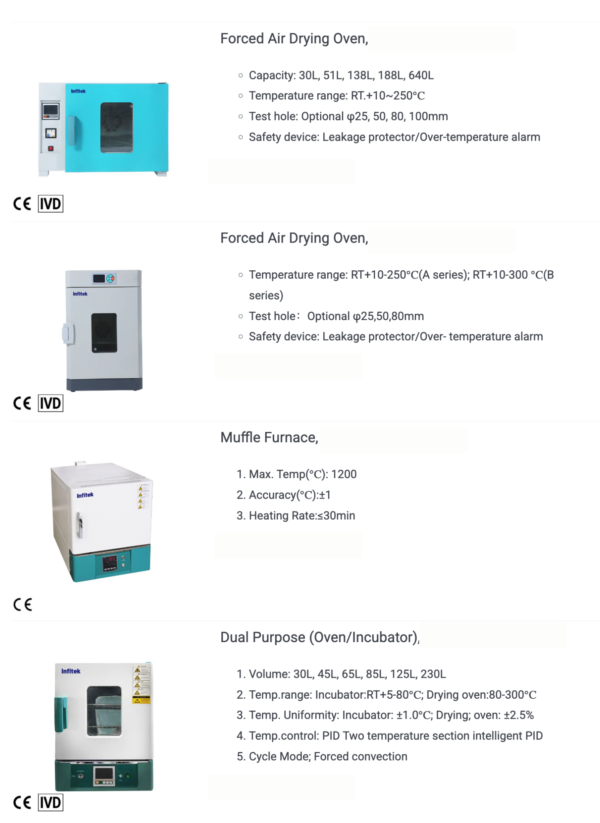
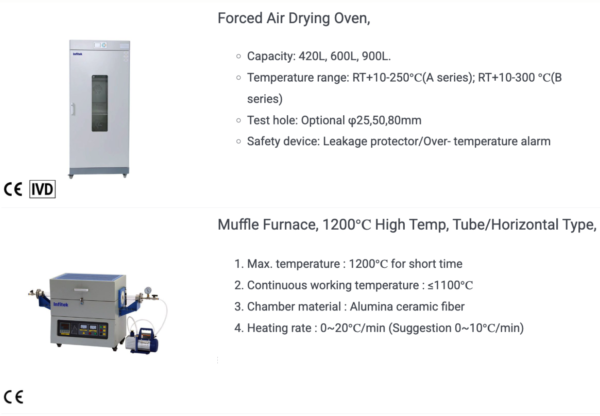
Forced Air Drying Oven
Forced air ovens use an internal fan and air circulation system to distribute heat evenly throughout the chamber. This ensures faster heating and improved temperature uniformity for efficient drying and processing.
Applications
Laboratory ovens are commonly used for:
• Drying laboratory samples
• Sterilization of equipment and materials
• Heat treatment and conditioning of materials
• Pharmaceutical and chemical sample preparation
• Food testing and quality control
• Environmental and material science research
Key Features
• Precise temperature control using PID microprocessor controllers
• Stable and uniform heating performance
• Digital or LCD display for temperature monitoring
• Adjustable shelves for flexible sample placement
• Stainless steel inner chamber for durability and corrosion resistance
• Energy-efficient insulation for reduced heat loss
• Safety protection including over-temperature alarms